Start with the ground, not the name
An estate is not necessarily a botanical garden, and a botanical garden is not necessarily a place to sleep. The most useful first question is what connects the land, the house and the plants. Some properties grew around productive gardens and woodland management. Others became stages for landscape design or specialist collecting. A hotel may occupy only one corner of that inheritance. Understanding the relationship prevents a handsome building from standing in for a much more complicated history.
Look for an estate map before choosing a room. Boundaries may have shifted through sales, inheritance and changes of use. The historic park described in a guidebook can extend well beyond the grounds available to a present-day guest. Equally, a modest accommodation building may sit inside a remarkably intact landscape.
Separate the layers of the landscape
Gardens rarely belong to a single moment. A formal terrace might overlook an eighteenth-century park while a nineteenth-century conifer collection rises behind it. Later owners may have introduced a kitchen garden, a water garden or an experimental planting scheme. Restoration can reveal one layer while deliberately retaining another. “Original” therefore needs a date, a source and an explanation of what has survived.
Gertrude Jekyll and Edwin Lutyens are useful names when exploring the relationship between planting and architecture, but attribution should not travel by resemblance. A richly planted border is not proof of Jekyll’s involvement. Ask whether the connection rests on drawings, correspondence, a conservation statement or a later stylistic interpretation.
Find the evidence behind the atmosphere
A strong property history distinguishes documented events from tradition. Useful evidence includes historic maps, planting books, photographs, accession records, architectural surveys and statutory heritage entries. For English estates, Historic England’s records provide a starting point for listed buildings and registered parks and gardens. These are different forms of recognition: a protected house does not automatically mean every part of its garden has the same designation.
Read the record alongside the estate’s account. An official entry may explain a designed view or an important boundary that a hotel brochure barely mentions. Conversely, a property may hold detailed garden archives not reproduced in a public listing. Neither source should be stretched into a guarantee of condition, visitor access or the quality of a stay.
Understand what recognition does—and does not—mean
World Heritage inscription identifies outstanding universal value under UNESCO’s framework; it is not a hotel classification. The Royal Botanic Gardens, Kew, the Botanical Garden of Padua and Villa d’Este at Tivoli offer distinct lessons in scientific collecting, continuity and designed landscape. They are reference points in this atlas, not claims that accommodation is available within their protected grounds.
The ICOMOS–IFLA Florence Charter treats historic gardens as living monuments. Its central challenge is helpful even outside formal conservation work: plants grow and die, while a design may be intended to endure. Authenticity cannot simply mean keeping every organism unchanged. It involves informed decisions about replacement, maintenance, records and the relationship between living material and historic structure.
Place hospitality in its own chapter
Conversion to accommodation may finance repair, sustain horticultural employment and give a house a viable use. It can also introduce parking, lighting, service access and pressure for private event space. The question is not whether change occurred, but whether the changes respect the features that make the estate significant. A discreet new bedroom wing may sometimes protect an old interior better than extensive subdivision of the main house.
Gravetye Manor provides a documented hospitality example linked to William Robinson, who acquired the property in 1885. Ballyfin in County Laois and Heckfield Place in Hampshire offer other ways to investigate the relationship between a restored house, its grounds and present-day accommodation. Read each property’s own account, then ask current operational questions separately. Their histories do not establish identical access arrangements or equivalent botanical status.
Keep the human history in view
Estate narratives can make landscapes appear to have emerged from one owner’s taste. In reality, gardeners, builders, agricultural workers, nursery staff and later conservation teams shaped what survives. Plant introductions may also be connected to imperial trade, unequal collecting practices or the removal of knowledge from its original setting. A thoughtful account acknowledges these contexts without reducing every plant to a single story.
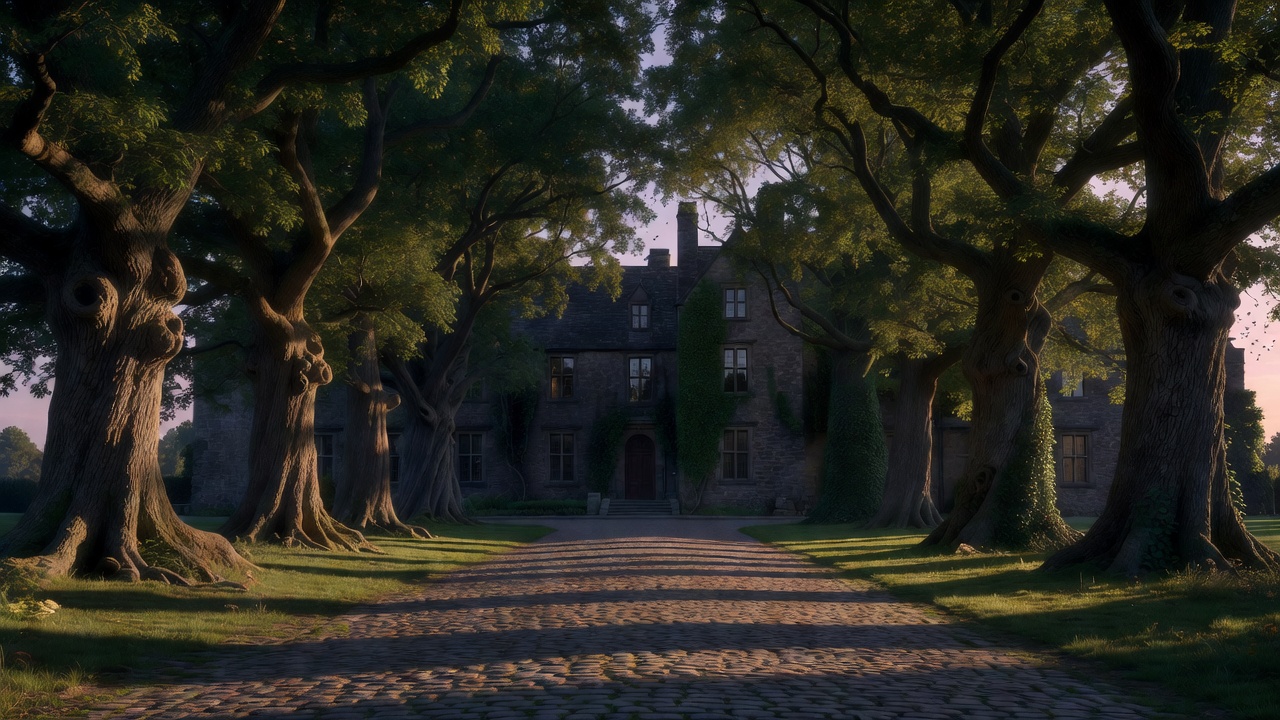
Before arrival, choose one feature to investigate closely: a veteran tree avenue, a walled garden or a glasshouse range. Note what is documented, what remains uncertain and what you want to ask. This small act of preparation transforms heritage from a decorative promise into a landscape you can read with care.